The Events That Set Sail the Cape May–Lewes Ferry
The Cape May–Lewes Ferry’s story begins not just on the Delaware Bay — but hundreds of miles south, on Virginia’s Chesapeake Bay. By the early 1960s, shifting transportation trends, new infrastructure, and an enterprising bi-state agency all converged to make the dream of a ferry between New Jersey and Delaware a reality.
The Chesapeake Connection
From the early 1930s through 1954, a private ferry line operated between Virginia’s Eastern Shore and Norfolk/Virginia Beach, carrying passengers and vehicles across the Chesapeake Bay.
In 1956, Virginia created the Chesapeake Bay Ferry District and began exploring a fixed crossing. The resulting Chesapeake Bay Bridge–Tunnel, completed in 1964, rendered the old ferry fleet obsolete — and created the perfect opportunity for Delaware and New Jersey officials seeking a similar service farther north.
When word of the Virginia bridge-tunnel project reached Delaware, planners at the newly formed Delaware River and Bay Authority (DRBA) saw potential: several Chesapeake ferries would soon be available for purchase, and the need for a Bay crossing between Cape May, NJ and Lewes, DE was growing.
The timing, as it turned out, was perfect.
Founding the Delaware River & Bay Authority
The Delaware River & Bay Authority was created in 1962 by both state legislatures and Congress to manage crossings of the Delaware River and Bay. After assuming operation of the Delaware Memorial Bridge in 1963, the Authority commissioned an updated feasibility study for a ferry connection.
By April 1963, the DRBA had formally resolved to establish the Cape May–Lewes Ferry as soon as possible. At the same time, it authorized construction of a second span of the Delaware Memorial Bridge and approved an ambitious $106 million financing plan combining both projects under one bond program.
Book Your Vehicle on the Ferry
The Purchase and Preparation
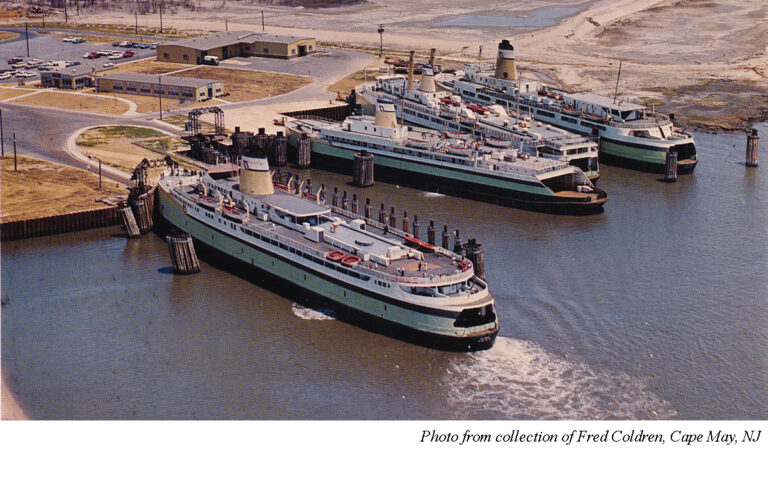
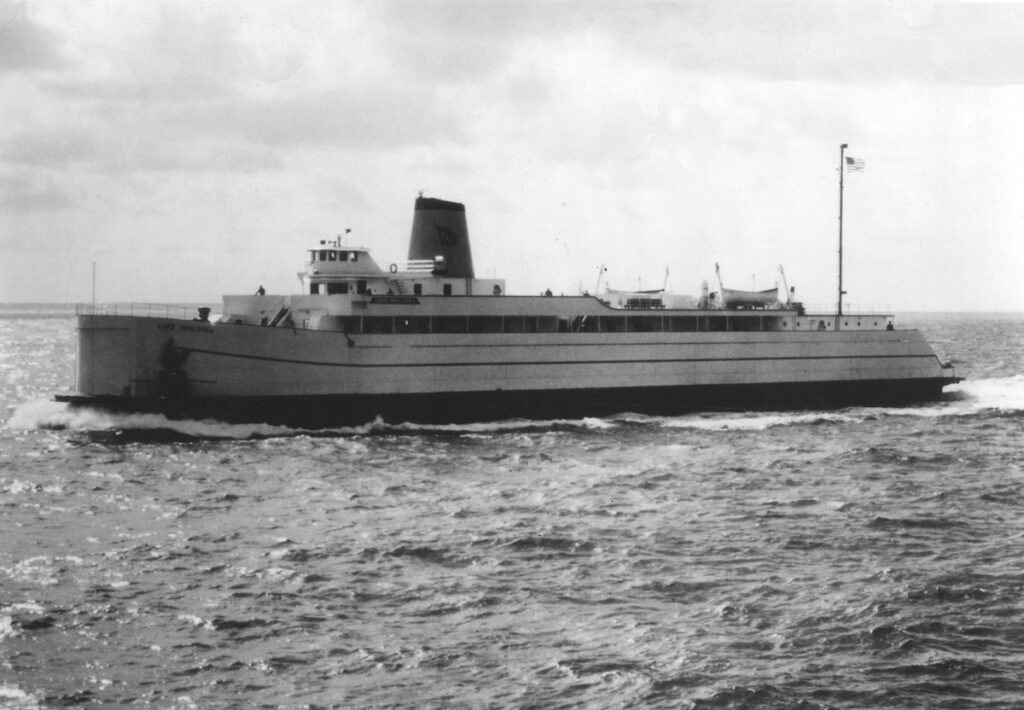
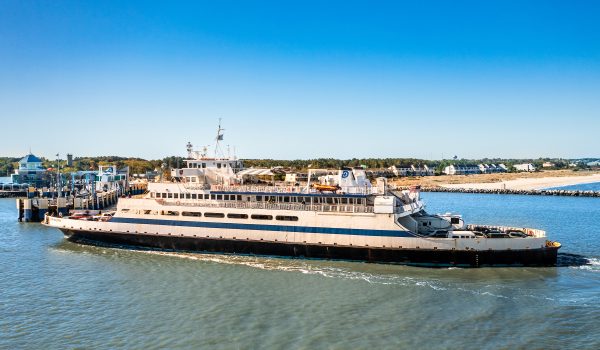
Negotiations with Virginia’s Ferry District proved successful. In 1963, DRBA purchased four vessels — the SS Pocahontas, SS Princess Anne, SS Del-Mar-Va, and MV Virginia Beach — for $3.3 million. They were soon rechristened as the SS Delaware, SS New Jersey, SS Cape May, and MV Cape Henlopen.
Refitting began at a Norfolk shipyard, while engineering plans for terminals, access roads, and dredging were finalized. The DRBA hired veteran Chesapeake ferry crews to oversee operations and training, including a general manager with over 30 years of maritime experience.

Perfect Timing for a New Era
With the Chesapeake fleet newly available, financing in place, and a public eager for new transportation options, 1964 became the ideal year to launch the Cape May–Lewes Ferry. By June 1964, construction of terminals in Lewes and Cape May was complete, and the fleet was ready to sail.
On July 1, 1964, the Ferry officially opened — an event celebrated with parades, air shows, boat flotillas, and joint ceremonies attended by both governors. The Cape May–Lewes Ferry had found its course, setting the stage for six decades of service on the Delaware Bay.